About

Tahmina Sultana Priya is a Ph.D. Candidate in Computer Science at Virginia Tech. Her research is driven by a simple question: how can we make machine learning reliable and understandable enough to actually help clinicians make better decisions?

Her work focuses on machine learning for healthcare, explainable AI, and precision medicine. She is particularly interested in developing models that can help with prognosis, identify meaningful patient subgroups, and better understand clinical outcomes in complex diseases. What she enjoys most about research is working with real-world clinical data and finding patterns that can lead to insights that are useful in practice.

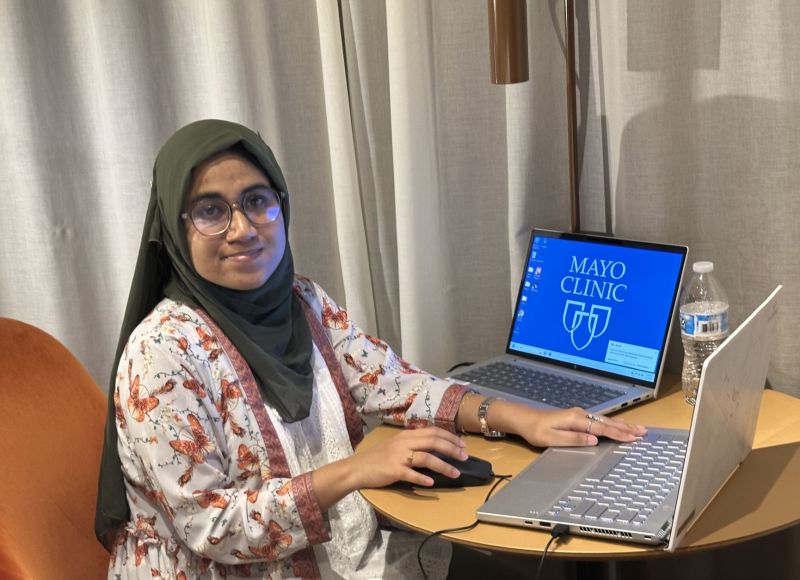
During her research journey, she has worked as a bioinformatics research intern and collaborated with the Mayo Clinic, gaining experience working with electronic health records and multi-omics data. These experiences have strengthened her interest in using computational methods to address challenging problems in healthcare and precision medicine.

She earned her M.S. in Computer Science from Virginia Tech and her B.Sc. in Computer Science and Engineering from Khulna University of Engineering & Technology in Bangladesh.

She is currently preparing for her Ph.D. defense and looking for postdoctoral or research opportunities where she can continue exploring meaningful problems at the intersection of machine learning and healthcare. In the long term, she hopes to build a career in academia, where she can pursue independent research, mentor students, and contribute to research that has a meaningful impact on people’s lives.

Outside of research, Tahmina enjoys meeting new people, spending time with friends, traveling, and exploring new places. She is naturally curious, enjoys learning from others, and is always up for a good conversation or a challenging problem.

Research Interests

  • Machine Learning for Health
  • Explainable AI
  • Precision Medicine
  • Large Language Models
  • EHR & Genomic Data Integration
  • Subgroup Discovery
  • Clinical Outcome Prediction

Education

Ph.D. in Computer Science
Virginia Tech
Exp. Dec 2026
M.Sc. in Computer Science
Virginia Tech · GPA 4.00/4.00
May 2025
B.Sc. in Computer Science & Engineering
Khulna Univ. of Eng. & Tech. · CGPA 3.77/4.00
Mar 2020

Experience

Graduate Research Assistant
May 2023 – Present
Virginia Tech, Department of Computer Science · Supervisor: [Advisor Name]
Python · R · SQL · Machine Learning · EHR Data Analytics
  • Analyze large-scale EHR, clinical, and genomic datasets to support precision medicine research.
  • Develop reproducible pipelines for healthcare data integration, preprocessing, and validation.
  • Build and evaluate predictive and statistical models for prognosis, risk stratification, and outcome prediction.
  • Apply explainable AI and subgroup modeling to identify clinical factors associated with disease progression.
Bioinformatics Intern, Division of Computational Biology
Jan–Aug 2024; May–Aug 2025
Mayo Clinic, Rochester, MN · Supervisor: [Supervisor Name]
Python · R · SQL · Clinical & Genomic Data Analysis
  • Analyzed EHR, clinical, and genomic data to identify factors associated with disease progression and patient outcomes.
  • Performed data preprocessing, integration, validation, and statistical analysis of large-scale biomedical datasets.
  • Developed predictive models for patient risk assessment, outcome prediction, and healthcare analytics.
  • Conducted survival and drug response analyses to support precision medicine research.
Graduate Teaching Assistant
Jan–Dec 2023
Virginia Tech, Department of Computer Science
Python · Java
  • Assisted instruction for Data Structures, Computer Organization, and Android Development courses.
  • Evaluated assignments and provided technical guidance to students.
Lecturer, Department of Computer Science and Engineering
Jan 2021 – Dec 2022
Daffodil International University, Dhaka
Python
  • Taught undergraduate courses including Web Engineering, Data Mining, Machine Learning, Software Engineering, Digital Electronics, and Data Communication.
  • Instructed over 200 students and supervised software development and research projects.
System Engineer & Senior Software Engineer
Aug 2020 – Dec 2022
Vertical Innovations Limited, Dhaka
Python · Django · Nuxt.js · JavaScript · PostgreSQL · IoT
  • Led development of scalable web applications using Django and Nuxt.js.
  • Developed Python-based analytics dashboards, visualization tools, and cloud-based solutions.
  • Designed IoT-based data collection systems and supported software deployment and operations.

News

[2027] Our paper, “pRFPS: A Subgroup-Specific Interpretable Risk Score for Predicting Rapid Fibrosis Progression in Metabolic Dysfunction-Associated Steatotic Liver Disease,” was accepted to the Pacific Symposium on Biocomputing (PSB).
[Sep 2026] Our paper, “Subtyping Metabolic Dysfunction-Associated Steatotic Liver Disease using Electronic Health Record-Linked Genomic Cohorts Reveals Diverse Etiologies and Progression,” was published in Nature Communications and covered by Mayo Clinic News Network, MedicalXpress, EurekAlert!, and several other news outlets.
[2026] Presenting “Prediction of Rapid Fibrosis Progression in MASLD with Interpretable Machine Learning Models” as a talk at ICIBM 2026.
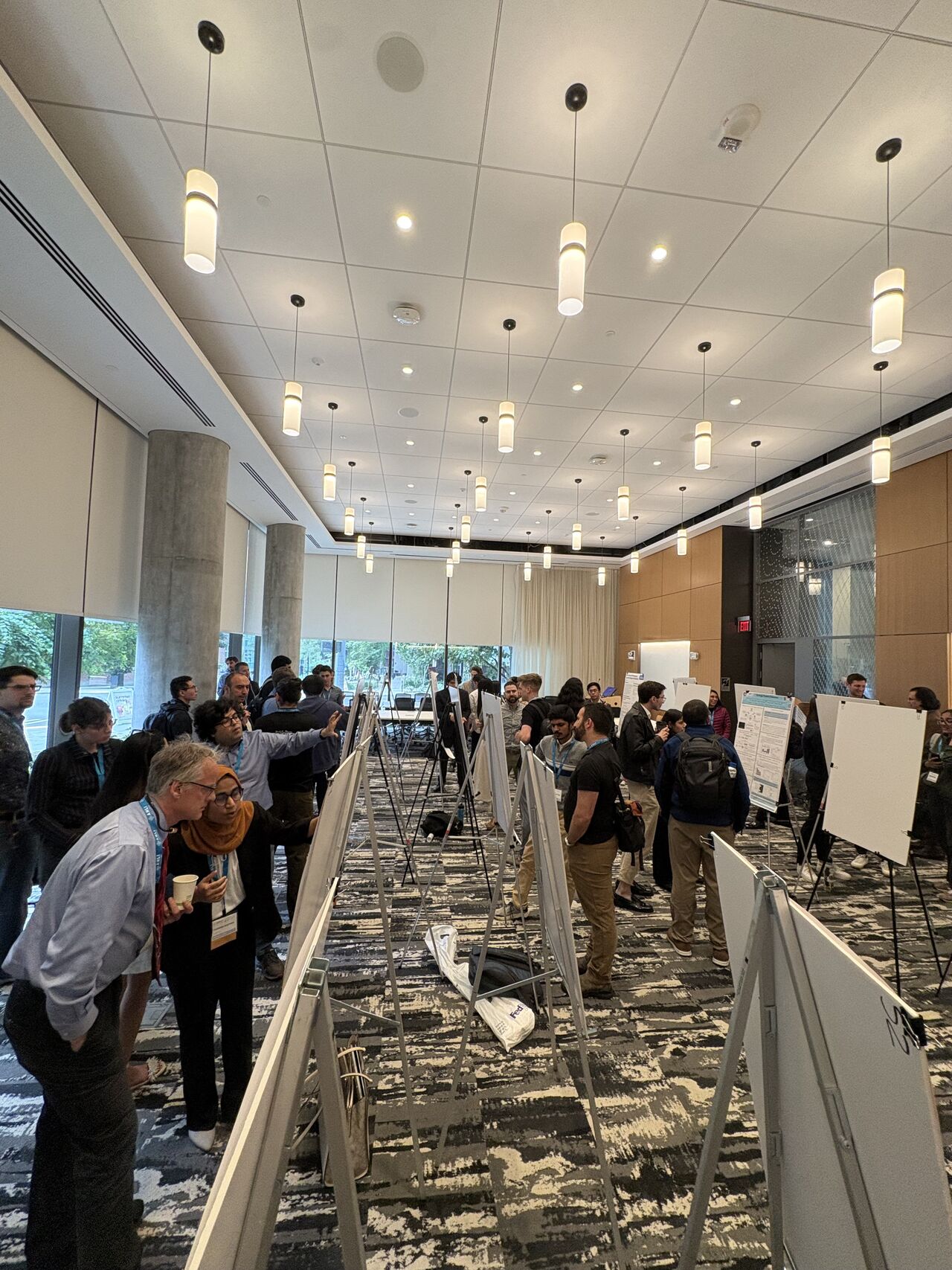
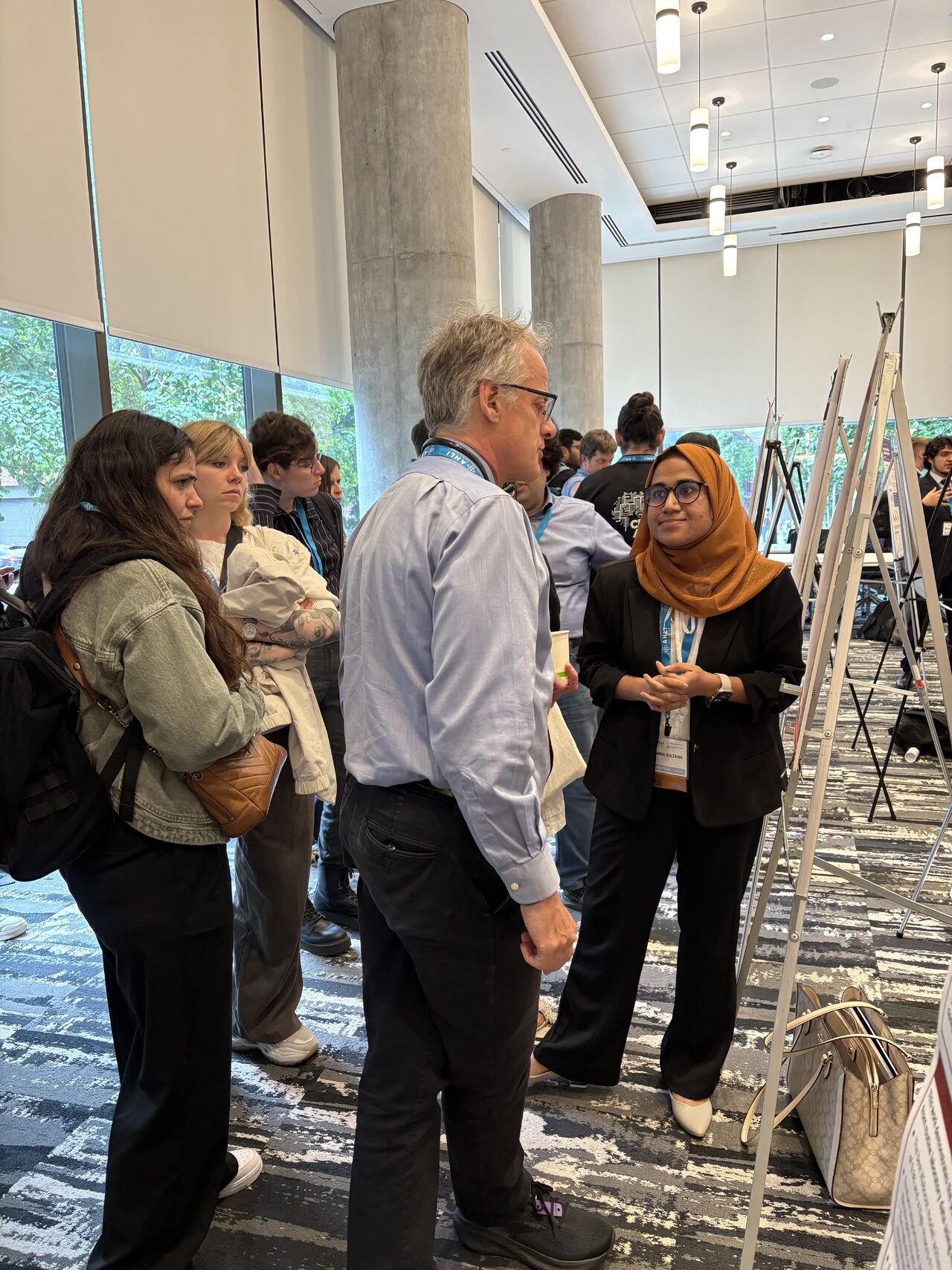
[2026] Presenting a poster, “Algorithm-Driven Precise and Explainable Prognosis for Complex Disorders,” at the AHLI Summer Camp & CHIL 2026.
[2024–2025] Awarded the Pratt Fellowship at Virginia Tech.
[Fall 2025] Passed the Ph.D. candidacy exam at Virginia Tech.
[2024] Gave a lightning talk, “Latent Class Analysis-Based Identification of NAFLD Subtypes with Distinct Metabolic and Genetic Signatures,” at MCBIOS 2024.

Publications

Priya, T.S., Wangensteen, K.J., Klee, E.W., Tian, S., Yao, D.D.
pRFPS: A Subgroup-Specific Interpretable Risk Score for Predicting Rapid Fibrosis Progression in Metabolic Dysfunction-Associated Steatotic Liver Disease
Pacific Symposium on Biocomputing (PSB), 2027 (Accepted)
Priya, T.S. et al.
Subtyping Metabolic Dysfunction-Associated Steatotic Liver Disease using Electronic Health Record-Linked Genomic Cohorts Reveals Diverse Etiologies and Progression
Nature Communications, 2026
Pias, T.S., Song, W., Priya, T.S., Dudani, S., Marchany, R., Tilley, B., Wang, L., et al.
On the Readiness of Enterprise-scale Log Analysis Solutions Against Advanced Persistent Threats
IEEE Secure Development (SecDev) Conference, 2025
Priya, T.S., Leng, F., Luehrs, A.C., Klee, E.W., Allen, A.M., Lazaridis, K.N., Tian, S.
Deep Phenotyping of Non-Alcoholic Fatty Liver Disease Patients with Genetic Factors for Insights into the Complex Disease
Machine Learning for Health (ML4H), 2023; arXiv:2311.08428

Presentations

Talk · ICIBM 2026
Prediction of Rapid Fibrosis Progression in Metabolic Dysfunction–Associated Steatotic Liver Disease with Interpretable Machine Learning Models
Talk (Lightning) · MCBIOS 2024
Latent Class Analysis-Based Identification of Non-Alcoholic Fatty Liver Disease Subtypes with Distinct Metabolic and Genetic Signatures
Poster · AHLI Summer Camp & CHIL 2026
Algorithm-Driven Precise and Explainable Prognosis for Complex Disorders
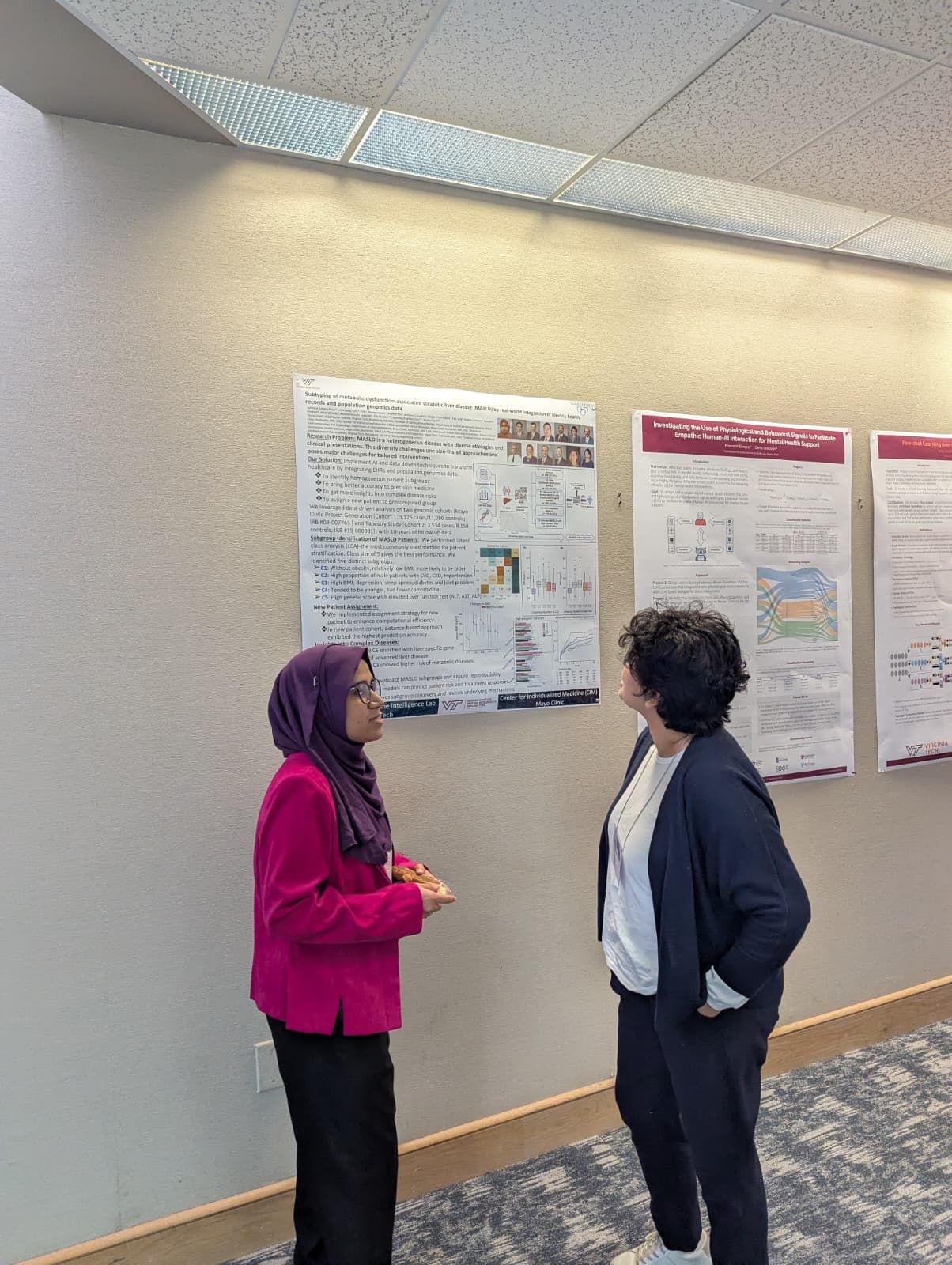
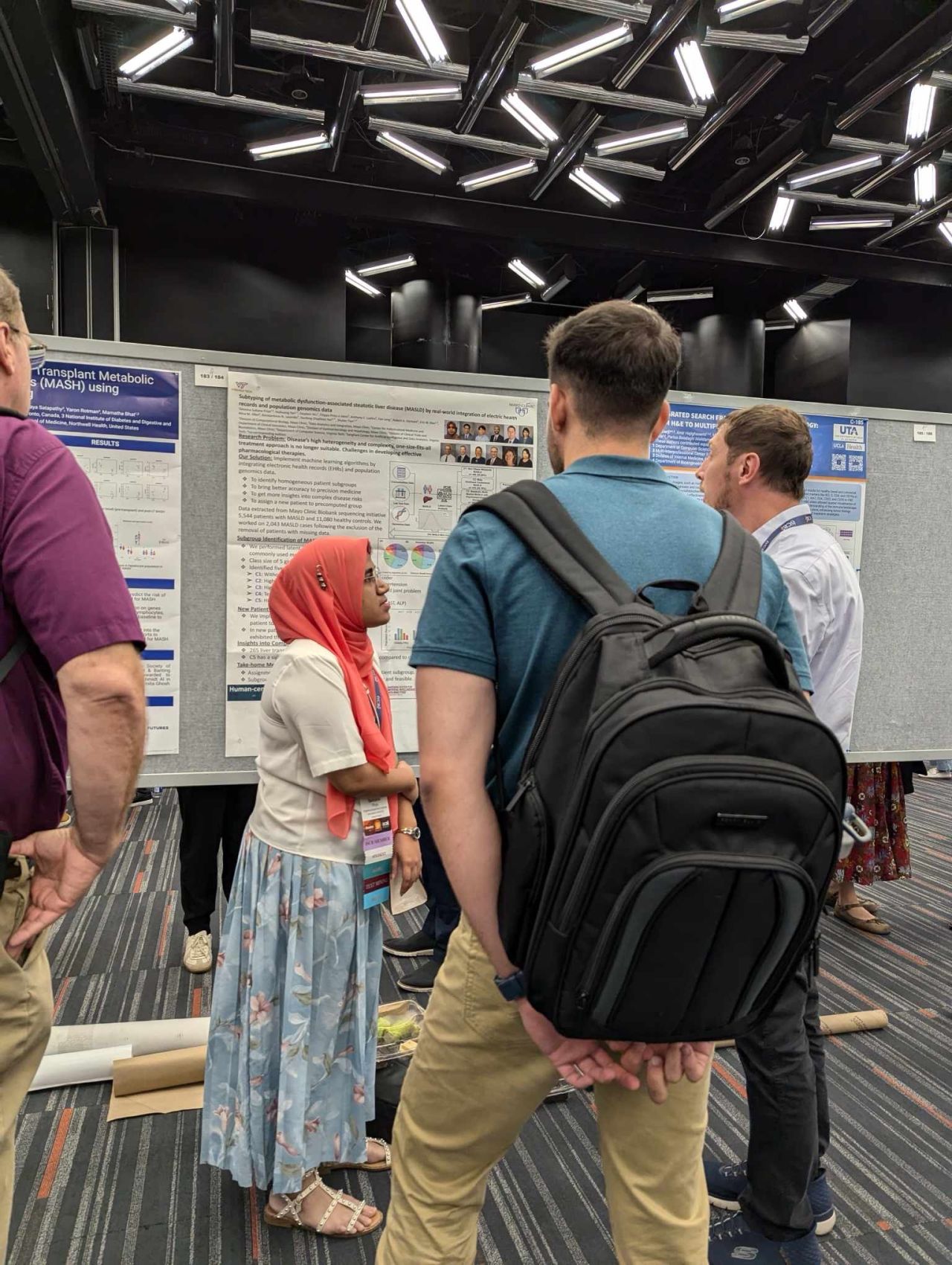
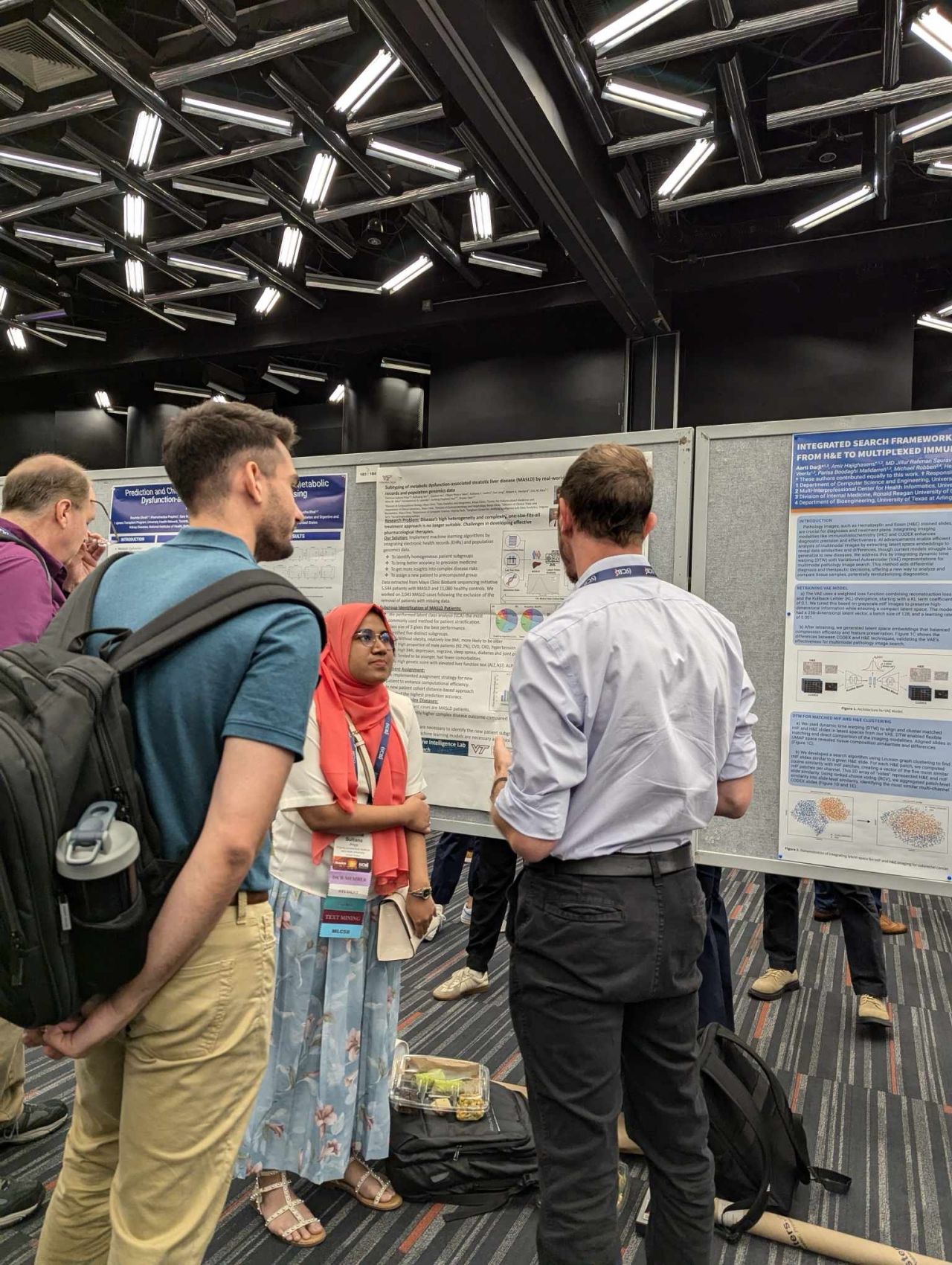
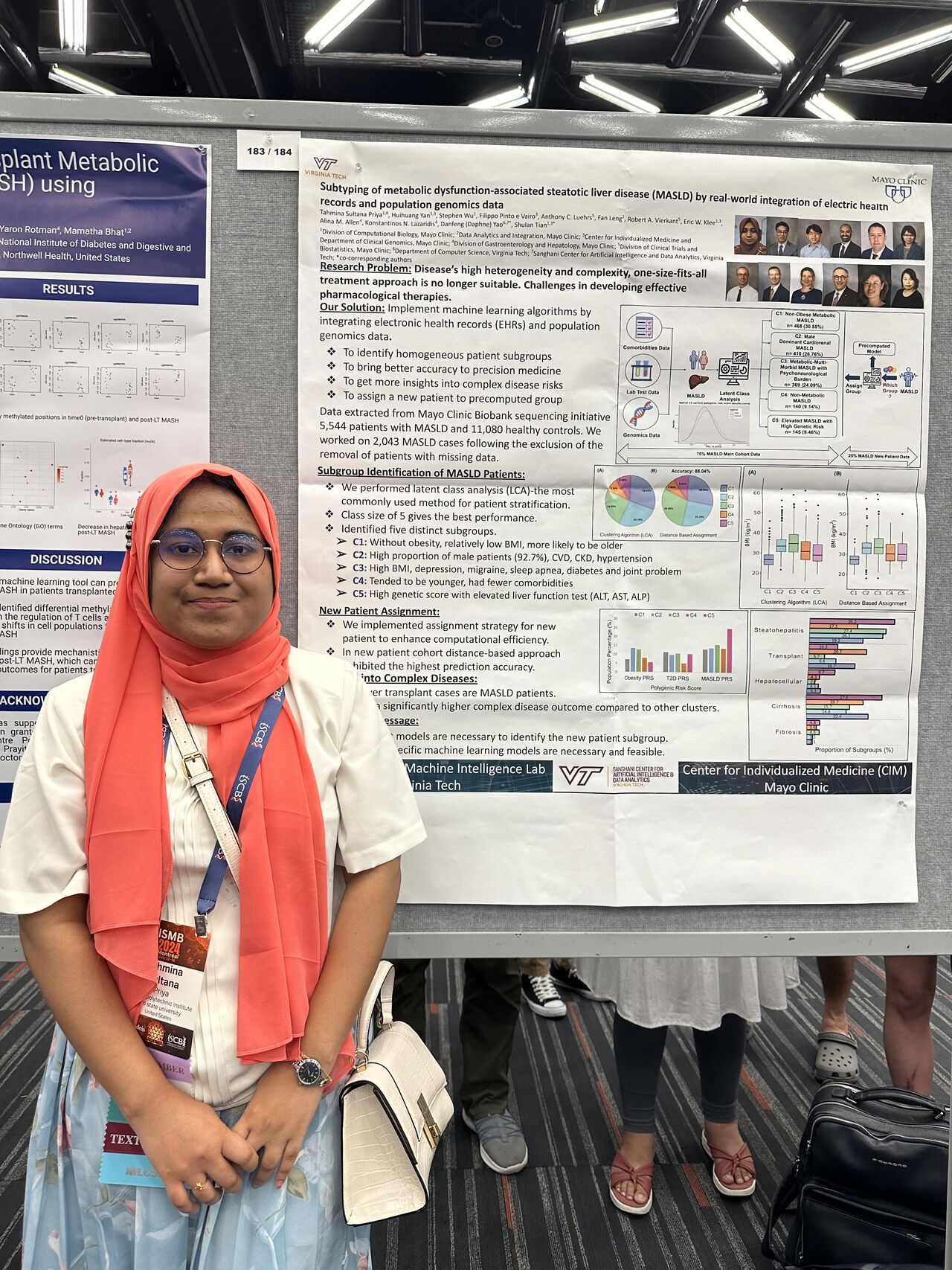
Poster · ISMB 2024
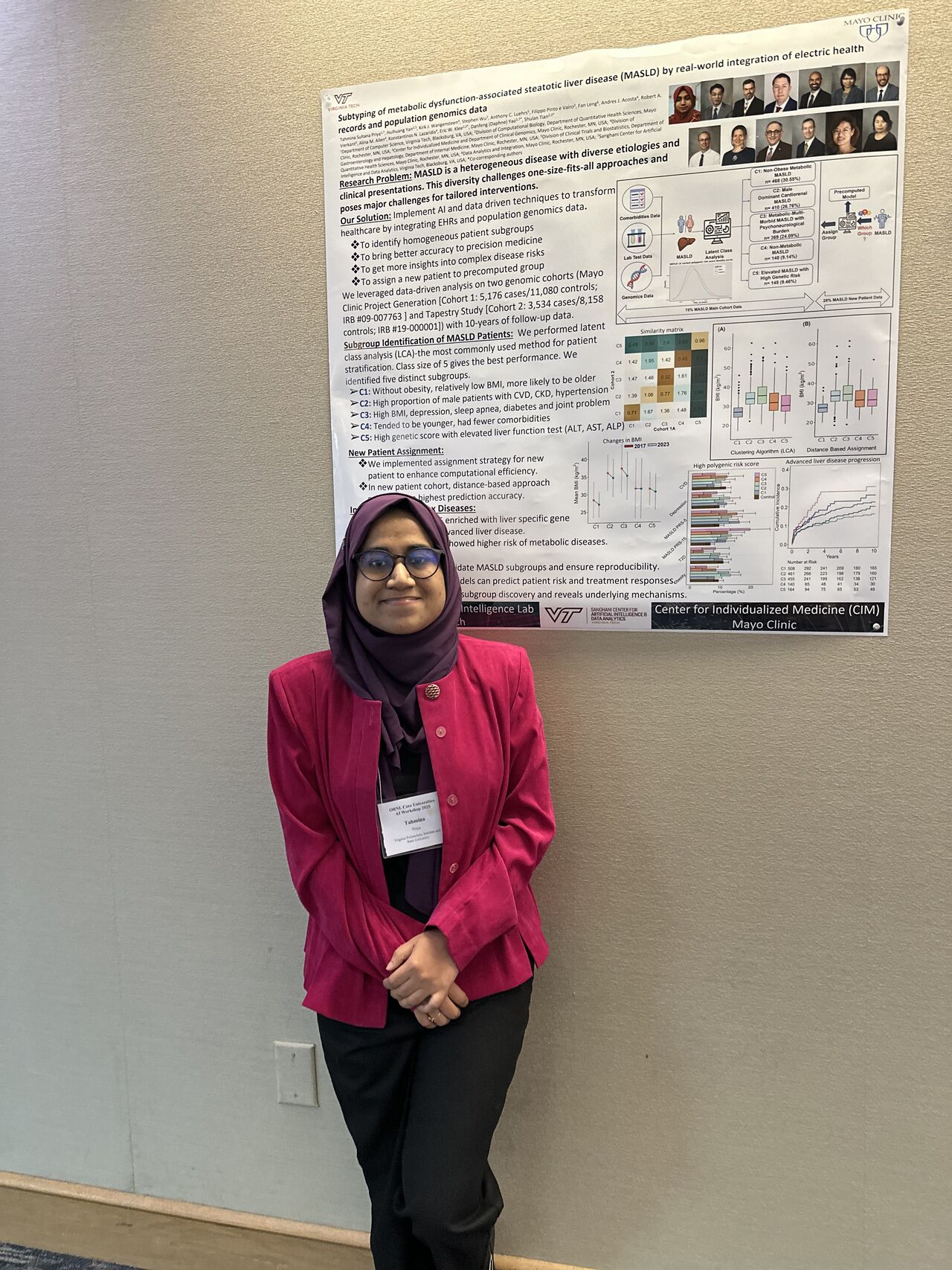
Subtyping of Metabolic Dysfunction-Associated Steatotic Liver Disease (MASLD) by Real-World Integration of Electronic Health Records and Population Genomics Data
Poster · ML4H & Women in ML, Virginia Tech
Deep Phenotyping of Non-Alcoholic Fatty Liver Disease Patients with Genetic Factors for Insights into the Complex Disease

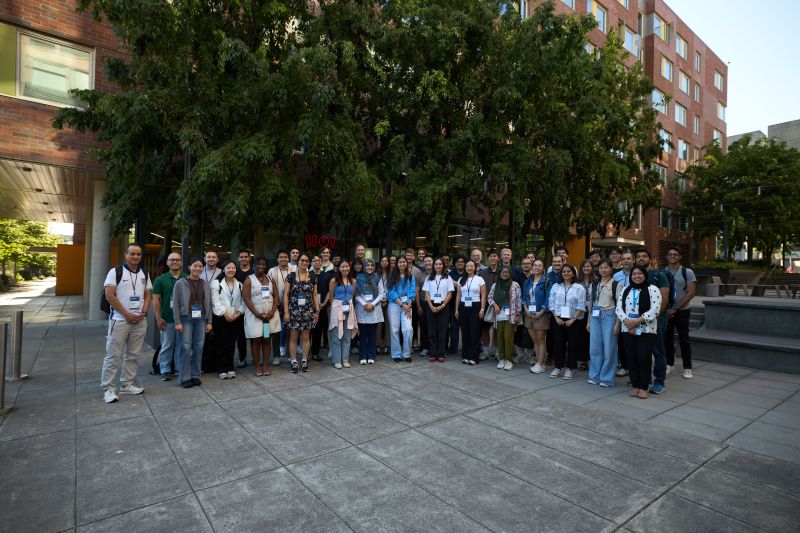
Photos

Awards & Honors

Pratt Fellowship, Virginia Tech2024–2025
Travel Award, ICIBM 20262026
Travel Award, CHIL 20262026
Selected Participant, AHLI Summer Camp2026
Dean's Award, Khulna University of Engineering & Technology2017–18, 2019–20
1st Runner-up, Textile Fest KUET — Fire-fighting Robot Project 
Government Scholarships, Bangladesh (General and Talent Pool) 

Technical Skills

ML/DL ModelsXGBoost, Random Forest, LightGBM, Logistic Regression, MLP, CNN, Autoencoder, LSTM, GRU
Large Language ModelsLlama, DeepSeek-R1, Qwen, Phi, RAG, Prompt Engineering, Multi-Agent Systems, Zero/Few-shot Learning, Reasoning, Chain-of-Thought
XAI & Model EvaluationSHAP, Feature Attribution, Model Calibration, Counterfactual Analysis, Dimensionality Reduction (PCA, t-SNE)
StatisticsANOVA, t-test, Chi-square, Cox Proportional Hazards
Languages & FrameworksPython, R, Scikit-learn, Pandas, C/C++, Java, NumPy, Matplotlib, PyTorch, HuggingFace Transformers
Healthcare DataElectronic Health Records, Genomic Data, Clinical Notes, ICD Codes, Billing Codes
DatabasesSQL, PostgreSQL, MySQL, Oracle
Tools & PlatformsGit, VS Code, WEKA